

8th July 2026
Culturally grounded SEWB services delivering meaningful outcomes for Aboriginal communities
An evaluation led by researchers from The University of Western Australia has found Aboriginal Community Controlled Social and Emotional Wellbeing (SEWB) services are delivering significant benefits for Aboriginal individuals, families and communities across Western Australia.
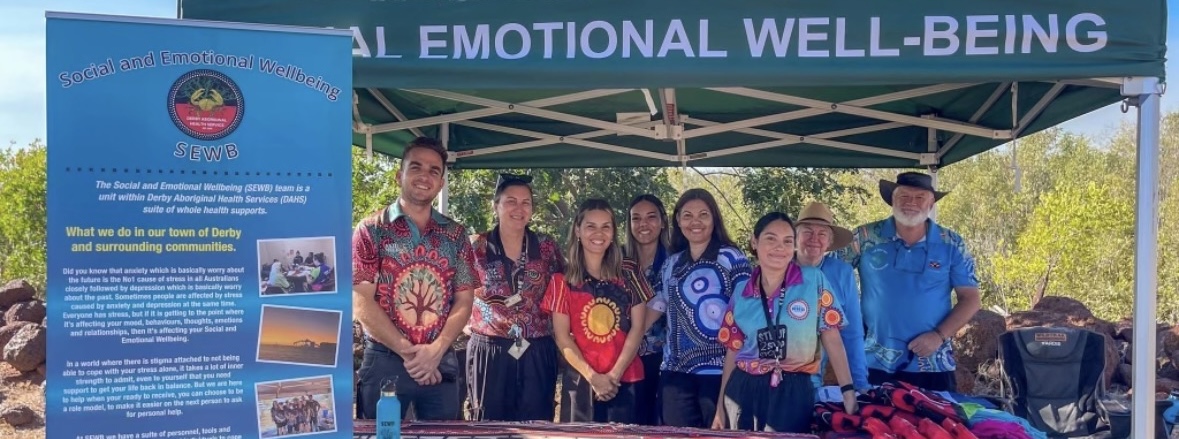
The evaluation, funded by the WA Mental Health Commission, examined the implementation of the Aboriginal Health Council of Western Australia’s (AHCWA) SEWB Service Model Pilot across participating Aboriginal Community Controlled Health Services (ACCHS), identifying strong evidence of culturally safe, holistic and community-responsive care.
The findings show that the service model strengthened cultural connection, improved engagement with services, reduced isolation, and supported healing and recovery through culturally grounded and place-based approaches to care.
Evaluation lead author Dr Rama Agung-Igusti, from UWA’s School of Indigenous Studies, said the findings demonstrated the importance of Aboriginal-led and culturally embedded wellbeing services.
“Clients consistently described these services as safe, meaningful and responsive to their realities, experiences and communities,” Dr Agung-Igusti said.
Co-author Dr Emma Carlin, from UWA’s Medical School and Rural Clinical School, emphasised the role of culture across every aspect of service delivery.
“What stood out strongly was that culture was not operating as an ‘add-on’ to service delivery – it was embedded throughout the model through workforce roles, relationships, types of support, and ways of working,” Dr Carlin said.
The AHCWA SEWB Model of Service brings together clinical and cultural expertise through interdisciplinary teams including Cultural Leads, SEWB Workers, counsellors and clinical staff.
Services are delivered through four pillars: culturally secure community development, psychosocial support, targeted interventions, and supported coordinated care.
The evaluation documented a range of positive outcomes for clients, including strengthened wellbeing, empowerment, healing, increased motivation, and stronger connections to family, culture and community. Many clients also reported feeling less alone and more supported after engaging with SEWB teams.
Co-author and Director of the Centre of Best Practice in Aboriginal and Torres Strait Islander Suicide Prevention (CBPATSISP) at UWA, Professor Pat Dudgeon AM said the evaluation reinforced the critical role of Aboriginal Community Controlled Health Services in delivering culturally safe and effective social and emotional wellbeing support.
“The findings demonstrate the strength of Aboriginal community-controlled approaches and the importance of investing in culturally grounded SEWB services for the long term,” Professor Dudgeon said.
“The report also identified key challenges impacting service delivery, including workforce recruitment and retention pressures and the need to develop and strengthen systems and processes for SEWB service delivery.”
The evaluation produced 10 recommendations aimed at strengthening the sustainability and integration of SEWB services, including recurrent funding, workforce development, improved systems and processes, and the development of culturally appropriate approaches to outcome monitoring and reporting.
AHCWA Chief Executive Officer Des Martin said the report marked a significant achievement for the ACCHS sector, representing the first sector-led translation of the SEWB concept into practical, community-driven service delivery.
“Evaluation findings highlight the value clients placed on the shared cultural backgrounds, lived experiences and community connections of Aboriginal staff, with the Cultural Lead role identified as a critical position in ensuring services are culturally relevant, secure and responsive,” Mr Martin said.
Western Australia Mental Health Commissioner Maureen Lewis said the model shows how effective co-design with Aboriginal-led organisations can be.
“The AHCWA SEWB Model of Service demonstrates the power of genuine partnerships with Aboriginal Community Controlled Organisations to deliver culturally grounded, community-led care,” Ms Lewis said.
Comments
“This evaluation provides a strong evidence base for the effectiveness of Aboriginal-led SEWB services and reinforces the importance of continued investment in culturally secure models of care that improve outcomes for Aboriginal people, families, and communities.”
— Maureen Lewis, Western Australian Mental Health Commissioner
“Sustained and long-term investment from the WA State Government is essential to build on the demonstrated outcomes of the pilot. Ongoing support will be critical to maintaining workforce stability, preserving the integrity of the SEWB Model of Service, and ensuring the continuity of culturally led, community-controlled care for Aboriginal people, families, and communities across Western Australia.”
— Des Martin, CEO Aboriginal Health Council of Western Australia